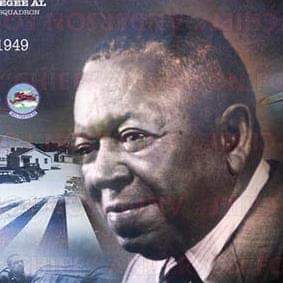
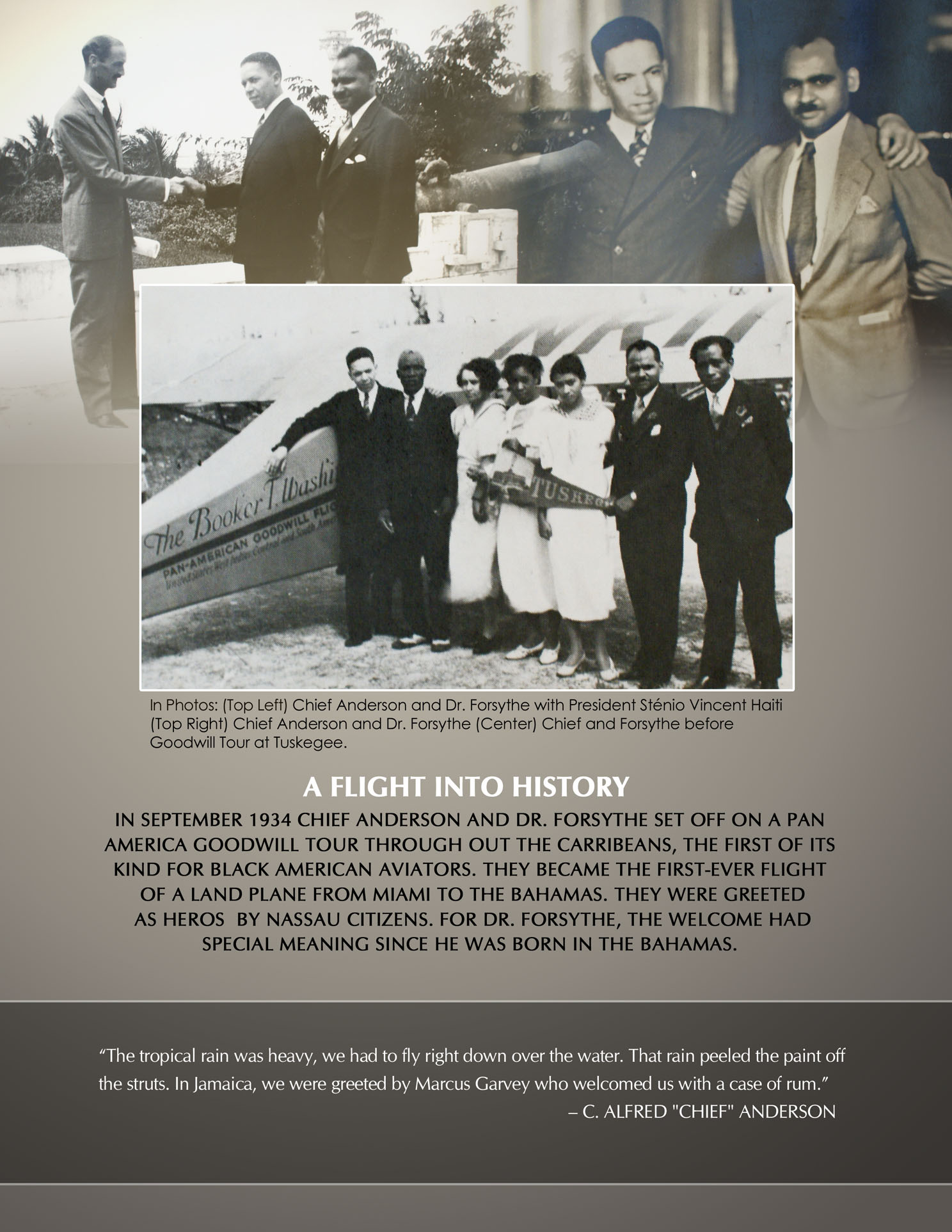
By September 1938, Anderson was instructing in the Washington D.C. area when he was hired as a flight instructor for the Civilian Pilot Training Program at Howard University. In 1940, Anderson was recruited by Tuskegee Institute in Alabama, as the Chief Civilian Flight Instructor for its new program to train black pilots. At the time of his hiring Anderson was the only qualified African American in the country with an air transport license who could train black pilots. He would develop a rigorous training program that not only pushed the limits of aviation at that time. He instrumental in designing and setting up the airfield and advanced course, earning him the name “Chief”.
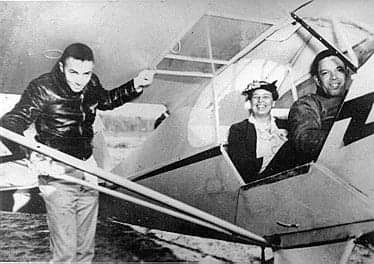
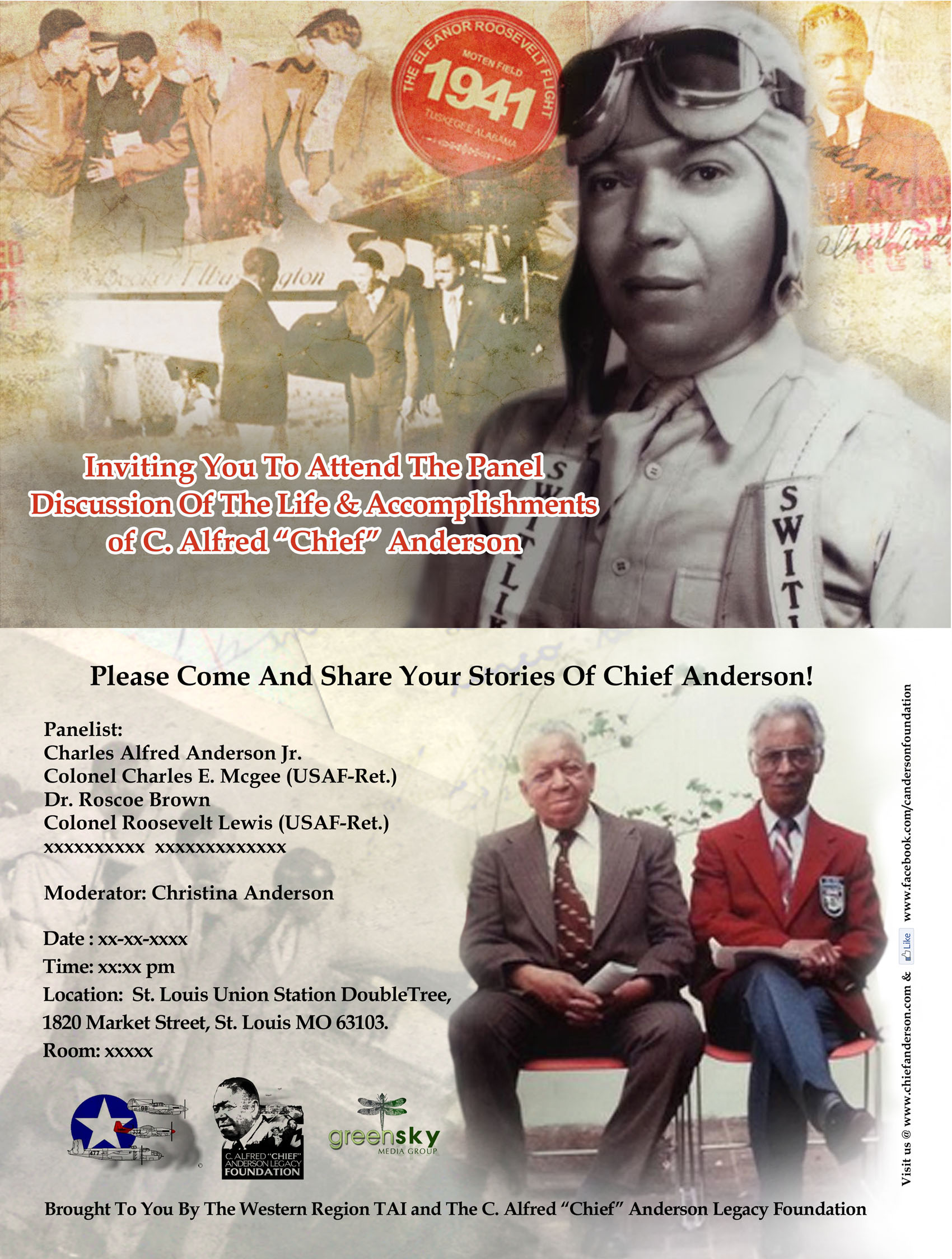
During the development of the Tuskegee Experiment, Anderson and many other prominent black figures helped to influence the Roosevelt Administration to order the War Department to create a black flying unit. In March 1941, First Lady Eleanor Roosevelt was touring Tuskegee Institute’s hospital. Knowing of the Tuskegee Experiment Program, she asked to meet the chief instructor and a flight. The results of their 40 min flight help boost the importance of the Tuskegee Experiment.
In June 1941, the Army selected Anderson as Tuskegee’s Ground Commander and Chief Instructor for aviation cadets of the 99th Pursuit Fighter Squadron, America’s first black fighter squadron. In July 1941, lieutenant colonel Benjamin O. Davis Jr. would be commissioned to command the 99th Pursuit Fighter Squadron and eventually the 332nd Fighter Group. Davis was one of Anderson’s first students in his advance training program to solo an Army Air Corps aircraft. Under Anderson’s tutelage and mentoring Davis lead the 99th in combat before join three other squadrons of Tuskegee Airmen in the 332nd Fighter Group, the “Red Tails”. Davis would later go on to become the first African-American general in the United States Air Force and second African American four-star General of the Air Force in 1988 when Bill Clinton pinned him with the four-star signia after his retirement in 1970.
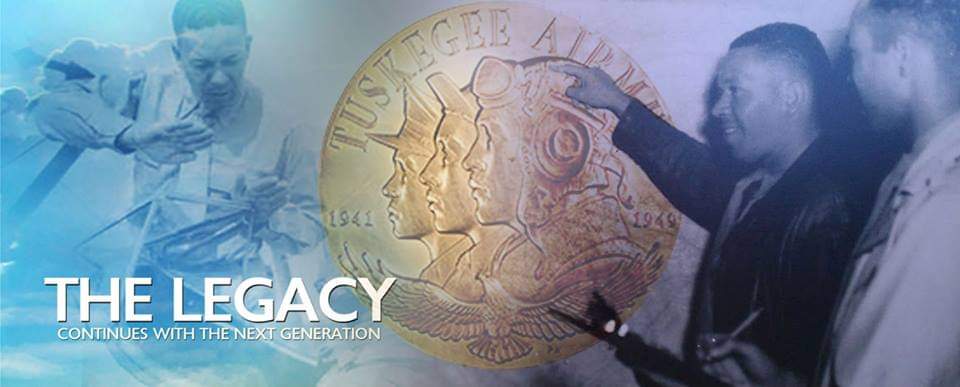
The 450 Tuskegee Airmen who saw combat flew 1,3,78 combat missions, destroyed 260 enemy planes, and earned over 150 Flying Crosses among numerous other awards. Anderson has touched many thousands of the nation’s military most famous General Benjamin O. Davis, Jr. and General Daniel “Chappie” James who was a mentor to Anderson as a Tuskegee Flight Instructor who would go on to become the first four-star General of the United States Air Force and Commander of the North American Aerospace Defense Command (NORAD).
Post War, Anderson would later be deemed “ The Father of Black Aviation by the Tuskegee Airmen and the black aviation community would provide ground and flight training to not only black and white students under the G.I. Bill, but also international students and Army and air Force ROTC cadets. He also provided aircraft and engine maintenance service and sold aircraft in the Southeast and Southwestern U.S
In 1967, Anderson co-founded Negro Airmen International (NAI), including the establishment of the summer flight academy for youth, and he continued to instruct students until 1989. Failing health finally grounded Anderson in the mid 1990’s. He died peacefully in his sleep on April 13, 1996 in Tuskegee, Alabama.
Anderson never sought fame, recognition or fortune for his accomplishments, yet he touched the lives of thousands of pilots, both civilian and military, many of whose names are found throughout aviation history books.
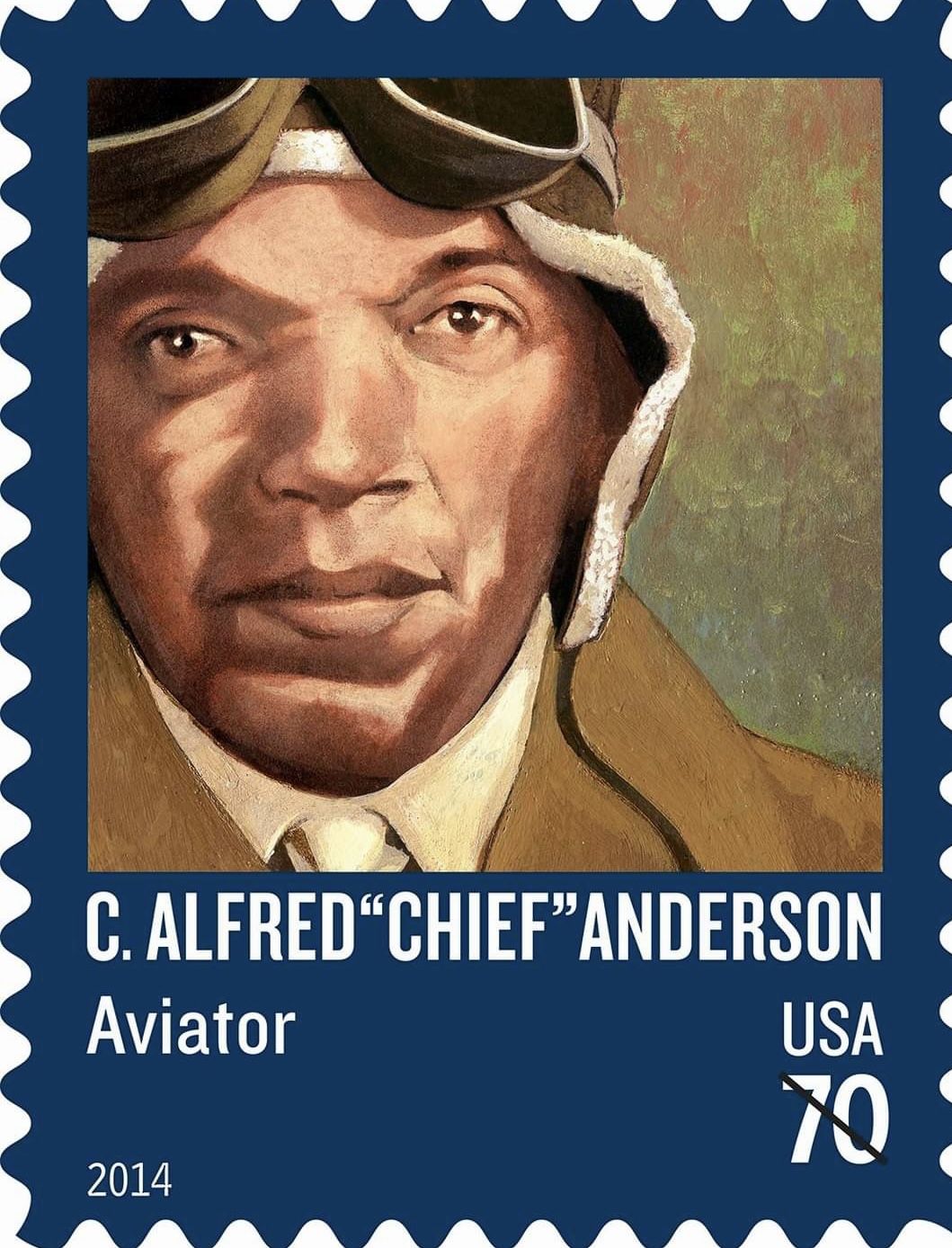
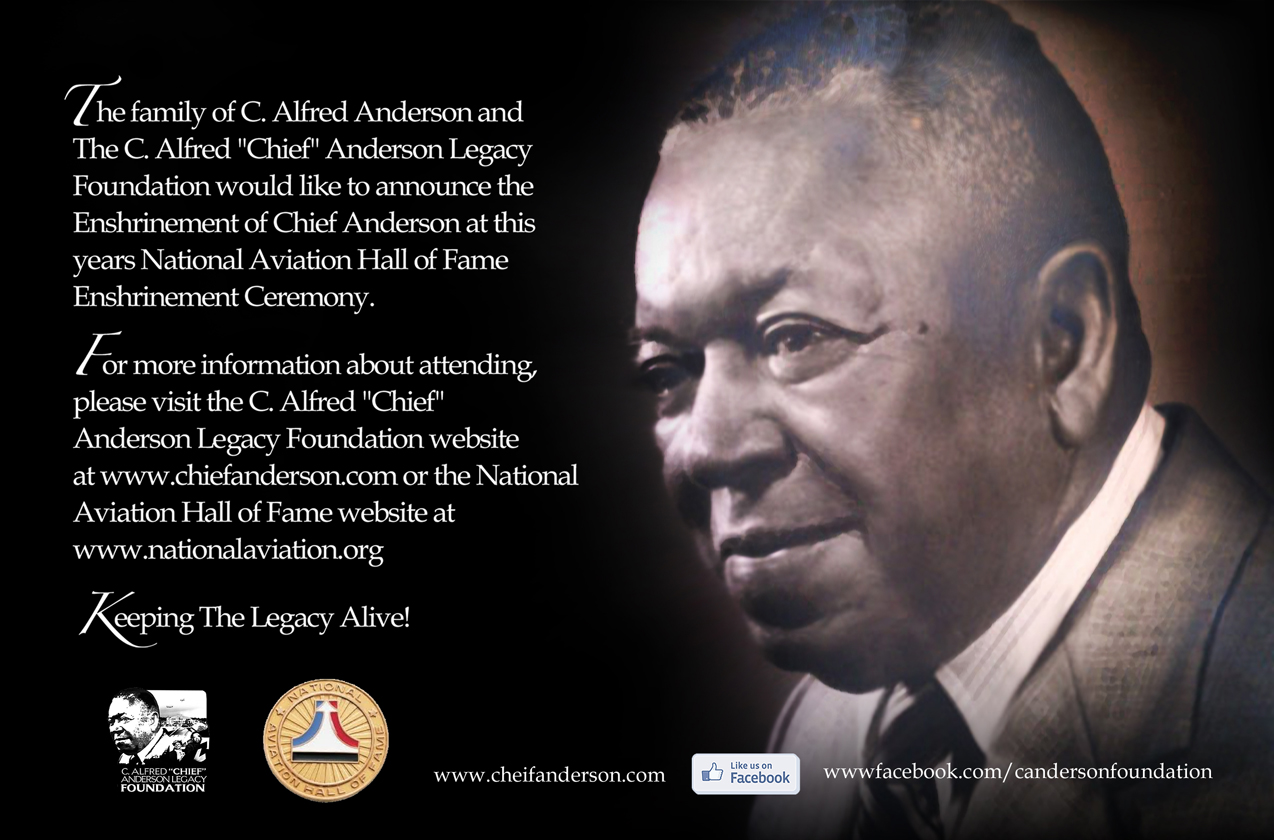
Upon his passing Chief Anderson as receive many honors and accolades for his selfless works. This past October 2013, Chief Anderson was recognized by Congress as one of four 51st Enshrines into the National Aviation Hall of Fame in Dayton Ohio. This is the highest recognition an aviator in this country can receive. The other three enshrines were General Patrick H. Brady (US Ret) a Medal of Honor Recipient, NASA Astronaut & Caption Robert “Hoot” Gibson (USN Ret) and Aviation Pioneer & Past Cessna Aircraft Company President Dwane Leon Wallace.
Help us celebrate this iconic figure by supporting our event. It is your support that allows us to continue sharing the legacy and story of Chief Anderson.